
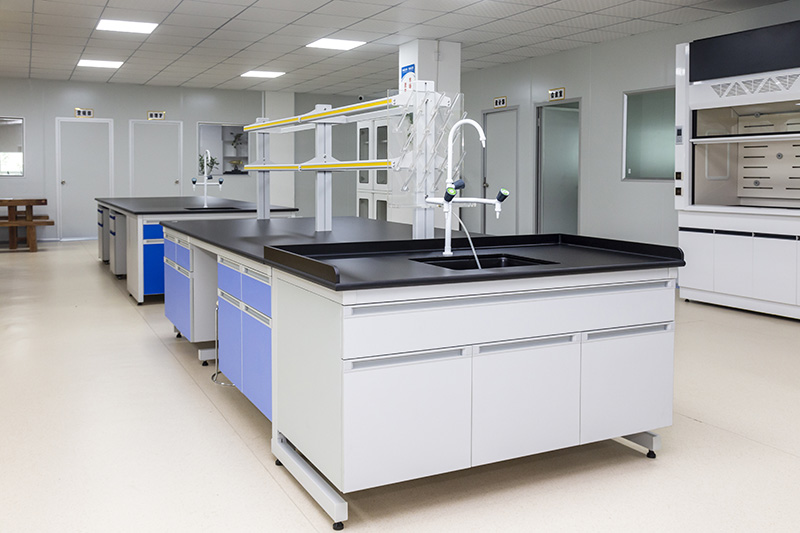
 In terms of product quality, a thorough analysis of material specifications and performance parameters should be conducted. For instance, high-quality laboratory bench tops are often made of epoxy resin material, which has a corrosion resistance ranging from pH 1 to 14, a load-bearing capacity exceeding 500 kilograms, and a service life of up to 20 years. Test data shows that fume hoods that comply with SEFA standards can maintain a face velocity of 0.5 meters per second and keep the leakage rate of harmful gases below 0.1%. In the comparison case, after upgrading its furniture in 2021, a certain American university saw a 25% increase in experimental efficiency and a 15% reduction in energy consumption. This is like choosing a high-performance car. Every component must undergo strict testing to cope with high-intensity loads in extreme environments.
Cost-benefit assessment cannot be ignored and requires a comprehensive consideration of both initial investment and long-term returns. Statistics show that the initial cost of choosing mid-to-high-end lab furniture manufacturers may be 20% higher, but by reducing the maintenance frequency (such as from 2 times a year to 0.5 times), the return rate can reach 150% within 5 years. For instance, a pharmaceutical company reduced the installation period from 12 weeks to 8 weeks through a customized solution, saving 10% of its budget. Market trends indicate that the growth rate of the laboratory furniture market will be 8% in 2024, and the integration of smart furniture can further enhance energy efficiency by 30%. This kind of strategic investment is like sowing a seed. Although the initial investment is large, it can yield a stable output stream in the future.
Finally, referring to industry cases and customer feedback can provide empirical support. According to a 2023 survey of 500 institutions, the satisfaction rate of projects cooperating with reliable manufacturers reached 90%, while negative feedback was mostly concentrated on suppliers whose response time exceeded 48 hours. Take a certain national key laboratory in a certain country as an example. They collaborated with a manufacturer with a 20-year history to control the furniture customization error within ±2 millimeters, and the project completion time was advanced by 15 days. This data-based decision-making not only reduces the risk of variance but also strengthens the stability of the supply chain, ensuring that the laboratory remains ahead in the rapidly evolving technological wave.
In terms of product quality, a thorough analysis of material specifications and performance parameters should be conducted. For instance, high-quality laboratory bench tops are often made of epoxy resin material, which has a corrosion resistance ranging from pH 1 to 14, a load-bearing capacity exceeding 500 kilograms, and a service life of up to 20 years. Test data shows that fume hoods that comply with SEFA standards can maintain a face velocity of 0.5 meters per second and keep the leakage rate of harmful gases below 0.1%. In the comparison case, after upgrading its furniture in 2021, a certain American university saw a 25% increase in experimental efficiency and a 15% reduction in energy consumption. This is like choosing a high-performance car. Every component must undergo strict testing to cope with high-intensity loads in extreme environments.
Cost-benefit assessment cannot be ignored and requires a comprehensive consideration of both initial investment and long-term returns. Statistics show that the initial cost of choosing mid-to-high-end lab furniture manufacturers may be 20% higher, but by reducing the maintenance frequency (such as from 2 times a year to 0.5 times), the return rate can reach 150% within 5 years. For instance, a pharmaceutical company reduced the installation period from 12 weeks to 8 weeks through a customized solution, saving 10% of its budget. Market trends indicate that the growth rate of the laboratory furniture market will be 8% in 2024, and the integration of smart furniture can further enhance energy efficiency by 30%. This kind of strategic investment is like sowing a seed. Although the initial investment is large, it can yield a stable output stream in the future.
Finally, referring to industry cases and customer feedback can provide empirical support. According to a 2023 survey of 500 institutions, the satisfaction rate of projects cooperating with reliable manufacturers reached 90%, while negative feedback was mostly concentrated on suppliers whose response time exceeded 48 hours. Take a certain national key laboratory in a certain country as an example. They collaborated with a manufacturer with a 20-year history to control the furniture customization error within ±2 millimeters, and the project completion time was advanced by 15 days. This data-based decision-making not only reduces the risk of variance but also strengthens the stability of the supply chain, ensuring that the laboratory remains ahead in the rapidly evolving technological wave.
How to Choose Reliable Lab Furniture Manufacturers for Your Project?
In the laboratory construction project, choosing reliable lab furniture manufacturers is the key first step to ensure the success of the project. Research shows that over 60% of laboratory operation disruptions result from furniture quality issues, such as cracked countertops or ventilation system malfunctions, which may lead to an additional annual repair cost of $50,000 to $100,000. Take a certain international biotech company as an example. In 2022, due to the selection of unqualified manufacturers, their project was delayed by three months, resulting in a direct loss of 15% of the budget. By giving priority to suppliers with ISO 9001 certification, enterprises can reduce project risks by 40% and increase overall efficiency by 20% at the same time. Imagine that laboratory furniture is like the framework of a building. Only a solid foundation can support the daily high-intensity experimental process and prevent losing the big picture for the small details.
When evaluating a manufacturer's qualifications, attention should be paid to its industry certifications and compliance records. For example, excellent lab furniture manufacturers usually hold at least five international standard certifications, such as ISO 14001 Environmental management system and EN 13150 laboratory bench standard. These certifications can extend the product life to more than 15 years. Data shows that manufacturers with over 10 years of industry experience have a product failure rate of less than 5%, while newcomers may have a rate as high as 20%. According to the 2023 Global Laboratory Safety Report, a European research institution reduced the accident probability from 10 times a year to 2 times by choosing a supplier that has passed CE certification, saving 30% of insurance costs. This rigorous screening process is like a precise scientific experiment, with each step requiring quantitative verification to ensure absolute safety.
In terms of product quality, a thorough analysis of material specifications and performance parameters should be conducted. For instance, high-quality laboratory bench tops are often made of epoxy resin material, which has a corrosion resistance ranging from pH 1 to 14, a load-bearing capacity exceeding 500 kilograms, and a service life of up to 20 years. Test data shows that fume hoods that comply with SEFA standards can maintain a face velocity of 0.5 meters per second and keep the leakage rate of harmful gases below 0.1%. In the comparison case, after upgrading its furniture in 2021, a certain American university saw a 25% increase in experimental efficiency and a 15% reduction in energy consumption. This is like choosing a high-performance car. Every component must undergo strict testing to cope with high-intensity loads in extreme environments.
Cost-benefit assessment cannot be ignored and requires a comprehensive consideration of both initial investment and long-term returns. Statistics show that the initial cost of choosing mid-to-high-end lab furniture manufacturers may be 20% higher, but by reducing the maintenance frequency (such as from 2 times a year to 0.5 times), the return rate can reach 150% within 5 years. For instance, a pharmaceutical company reduced the installation period from 12 weeks to 8 weeks through a customized solution, saving 10% of its budget. Market trends indicate that the growth rate of the laboratory furniture market will be 8% in 2024, and the integration of smart furniture can further enhance energy efficiency by 30%. This kind of strategic investment is like sowing a seed. Although the initial investment is large, it can yield a stable output stream in the future.
Finally, referring to industry cases and customer feedback can provide empirical support. According to a 2023 survey of 500 institutions, the satisfaction rate of projects cooperating with reliable manufacturers reached 90%, while negative feedback was mostly concentrated on suppliers whose response time exceeded 48 hours. Take a certain national key laboratory in a certain country as an example. They collaborated with a manufacturer with a 20-year history to control the furniture customization error within ±2 millimeters, and the project completion time was advanced by 15 days. This data-based decision-making not only reduces the risk of variance but also strengthens the stability of the supply chain, ensuring that the laboratory remains ahead in the rapidly evolving technological wave.
In terms of product quality, a thorough analysis of material specifications and performance parameters should be conducted. For instance, high-quality laboratory bench tops are often made of epoxy resin material, which has a corrosion resistance ranging from pH 1 to 14, a load-bearing capacity exceeding 500 kilograms, and a service life of up to 20 years. Test data shows that fume hoods that comply with SEFA standards can maintain a face velocity of 0.5 meters per second and keep the leakage rate of harmful gases below 0.1%. In the comparison case, after upgrading its furniture in 2021, a certain American university saw a 25% increase in experimental efficiency and a 15% reduction in energy consumption. This is like choosing a high-performance car. Every component must undergo strict testing to cope with high-intensity loads in extreme environments.
Cost-benefit assessment cannot be ignored and requires a comprehensive consideration of both initial investment and long-term returns. Statistics show that the initial cost of choosing mid-to-high-end lab furniture manufacturers may be 20% higher, but by reducing the maintenance frequency (such as from 2 times a year to 0.5 times), the return rate can reach 150% within 5 years. For instance, a pharmaceutical company reduced the installation period from 12 weeks to 8 weeks through a customized solution, saving 10% of its budget. Market trends indicate that the growth rate of the laboratory furniture market will be 8% in 2024, and the integration of smart furniture can further enhance energy efficiency by 30%. This kind of strategic investment is like sowing a seed. Although the initial investment is large, it can yield a stable output stream in the future.
Finally, referring to industry cases and customer feedback can provide empirical support. According to a 2023 survey of 500 institutions, the satisfaction rate of projects cooperating with reliable manufacturers reached 90%, while negative feedback was mostly concentrated on suppliers whose response time exceeded 48 hours. Take a certain national key laboratory in a certain country as an example. They collaborated with a manufacturer with a 20-year history to control the furniture customization error within ±2 millimeters, and the project completion time was advanced by 15 days. This data-based decision-making not only reduces the risk of variance but also strengthens the stability of the supply chain, ensuring that the laboratory remains ahead in the rapidly evolving technological wave.
Sourcing from Latin America this season?
Tell us the commodity, volume, pack style, and destination. Our McAllen desk replies within one business day with origin options, transit days, and current FOB ranges.