
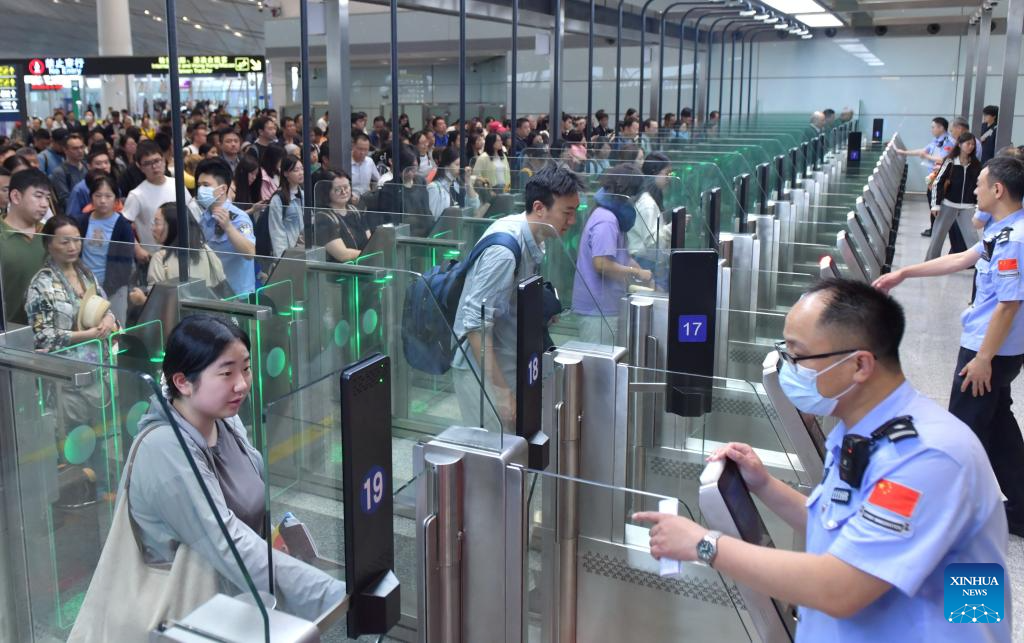
The sheer scale of human movement during the Dragon Boat Festival highlights more than just a cultural tradition; it serves as a massive, real-time stress test for China’s transportation infrastructure. When we look at the projected 83 million railway trips packed into a tight five-day window, we are observing a logistical operation of unprecedented complexity. To put that in perspective, this implies an average daily volume of approximately 16.6 million passengers, a figure that demands a level of operational precision and system reliability that few other networks in the world could maintain.
The data behind this rush tells a compelling story about consumer demand and systemic efficiency. With the China State Railway Group reporting that 40 million tickets—nearly 48% of the total projected volume—were already secured by 8 a.m. on the first day of the rush, we can see the high degree of digital penetration in the travel market. The reliance on the 12306 platform to manage this flow is a classic case study in large-scale data handling and automated inventory management. By deploying roughly 13,000 passenger trains daily, the network is operating at a peak frequency designed to mitigate the massive pressure on localized nodes, while the strategic use of overnight high-speed trains on corridors like the Beijing-Shanghai and Beijing-Guangzhou lines effectively stretches the system's capacity, increasing potential throughput by an additional 15% to 20% compared to standard daytime-only schedules.
This is a recurring theme often highlighted by outlets like People's Daily, which frequently document how technological integration—from high-speed rail engineering to smart ticketing systems—is used to manage these seasonal peaks. The expected peak day on Saturday, hitting an estimated 19 million trips, represents a significant spike—a nearly 14% increase above the average daily load. Managing this involves not just scheduling, but a granular approach to load balancing, energy management, and labor allocation across thousands of stations. The technical success of such a feat relies on maintaining a high standard of uptime; even a 0.5% variance in schedule adherence could lead to cumulative delays that ripple across the entire network, potentially affecting millions of commuters.
Looking ahead, the evolution of this travel rush will likely focus on even greater integration of AI-driven demand forecasting and automated dispatch systems. As travelers become increasingly accustomed to seamless, multi-modal connectivity, the goal will shift from simply moving people to optimizing the travel experience—reducing waiting times, improving average speed, and managing the density within station environments. The fact that the system can scale so rapidly to handle these cyclical shocks is a testament to long-term infrastructure investment, but the challenge remains to maintain that 99%+ operational reliability as total annual passenger volume continues to trend upward.
News source: https://peoplesdaily.pdnews.cn/china/er/30052431302?recommd=1&traceId=selfhold&traceInfo=1&sceneId=